
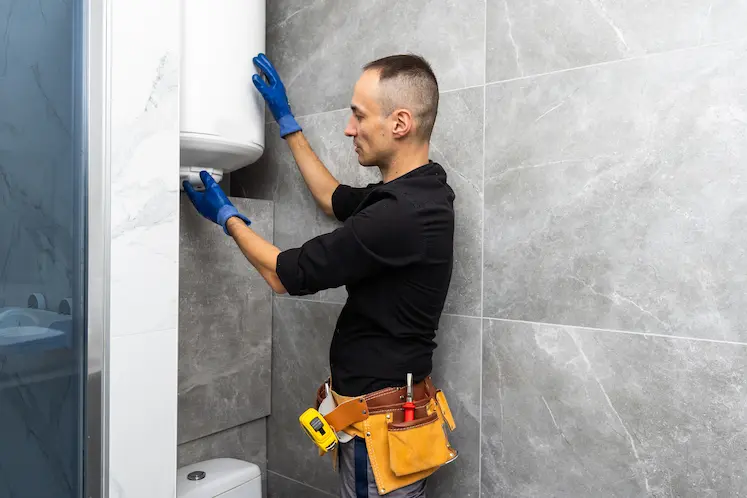
No Hot Water? What To Check Before You Call An Emergency Plumber
No hot water is rarely an emergency in the flood-the-kitchen sense, but it's still miserable, and more often than not the cause is something you can check yourself in a couple of minutes before picking up the phone. Here's what's worth ruling out first.
Check the boiler's pressure gauge
Most modern combi boilers have a pressure gauge on the front, usually a small dial or digital display. It should normally sit somewhere between 1 and 1.5 bar. If it's dropped close to zero, low pressure is very likely why you've got no heat or hot water - the boiler won't fire properly below its minimum threshold. Many boilers have a filling loop, a small lever or valve underneath, that lets you top the pressure back up yourself. If you're not sure where yours is or how to use it, it's a simple job for a plumber rather than something to guess at.
Check for a lockout, not a breakdown
Boilers "lock out" as a safety response to all sorts of minor faults, and most display a fault code or a flashing light when they have. A single reset - usually a button held for a few seconds - clears a lockout and gets things running again if the underlying cause was minor. If it locks out again straight away, or the same fault code keeps reappearing, stop resetting it and treat that repeated pattern as a sign of a genuine fault rather than a one-off glitch.
Check the power switch
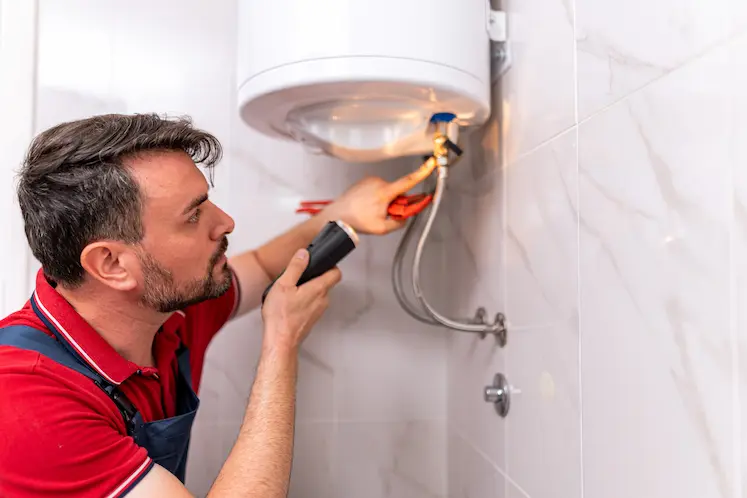
Boilers are usually wired through their own fused spur switch - a small switch on the wall nearby, often near a socket, sometimes tucked in a kitchen cupboard. It's easy to knock off without noticing, and it's worth checking it's actually switched on before assuming anything more serious is wrong. Worth checking your home's fuse board too, in case the boiler's circuit has simply tripped.
Check for a frozen condensate pipe
In cold weather, this is one of the most common reasons a combi boiler stops working altogether. The condensate pipe carries waste water away from the boiler, usually running outside to a drain, and if it freezes the boiler locks out as a safety measure. Look outside for the pipe - usually a grey plastic pipe near an external wall - and check whether there's an obvious ice blockage. If there is, warm water poured carefully over the frozen section (never boiling water, which can crack the pipe) can sometimes clear it. If you can't find the pipe or reach it safely, this is a straightforward job for a plumber.
Tried the basics and still no luck?
Call Now 8001026110No hot water, but the heating still works?
If your radiators are warm but taps are running cold, the cause is probably somewhere else entirely. Homes with a hot water cylinder rather than a combi boiler often heat water via an immersion heater as a backup, and a tripped immersion switch or a failed heating element is a common, separate fault from anything affecting your central heating. Check whether your immersion heater has its own switch or timer, and whether that's been left off or has tripped, before assuming the whole system needs attention.
When to call an emergency plumber
Once you've ruled out the easy causes, it's worth getting someone out rather than leaving it - especially with children, older residents, or anyone vulnerable in the house. Call an emergency plumber if:
- The pressure keeps dropping again shortly after you top it up
- The boiler locks out repeatedly with the same fault code
- You can't find or safely reach the condensate pipe to check it
- There's a smell of gas, or you suspect a leak anywhere near the boiler
- You've checked everything above and there's still no hot water
A local plumber can diagnose the actual fault properly, whether that's a failing part, a genuine leak, or something in the system that needs more than a reset - and get your hot water back safely rather than you working through it by trial and error.
Read next
Locked Out? What To Do Before You Call A Locksmith
A few quick checks before you pick up the phone can save you a call-out fee, or at least help the locksmith who comes get you back in faster.
Read the guide →
How To Find And Reset Your Fuse Box Safely
A tripped switch is one of the few electrical faults you can safely check yourself. Here's how to find your fuse box and reset it without making things worse.
Read the guide →
Burst Pipe? What To Do In The First 5 Minutes
A burst pipe can flood a room in minutes. Here is exactly what to do, in the order that actually limits damage, before the plumber arrives.
Read the guide →
Power Cut? How To Tell If It's Just Your House Or The Whole Street
Losing power suddenly is disorientating. Here's how to work out in a couple of minutes whether it's your fuse board or a wider network fault.
Read the guide →
Key Snapped In The Lock? What To Do Next
A key breaking off mid-turn is a different problem to being locked out. Here's what to check before you try to get it out yourself.
Read the guide →No hot water and can't fix it yourself?
Our line is open 24 hours a day, 7 days a week. Call now and we'll send a local plumber.
Call Now 8001026110