

How To Find And Reset Your Fuse Box Safely
Sudden loss of power to part or all of your home is usually down to one thing: a switch inside your fuse box has tripped. It's one of the few electrical faults you can safely check yourself - as long as you know what you're looking at and stop the moment something doesn't seem right. This guide walks through finding the board, spotting the tripped switch, resetting it properly, and knowing when to stop and call someone instead.
Finding your fuse box
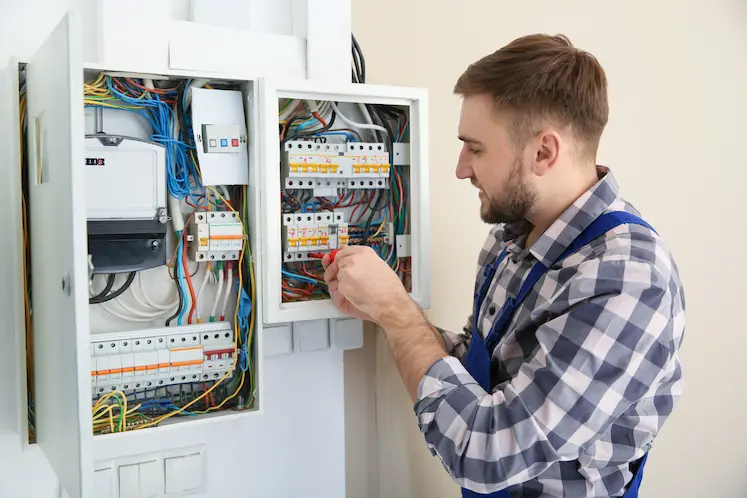
Modern homes call it a "consumer unit" - a grey plastic box with a row of switches, usually found in a hallway, under the stairs, in a garage, or near the meter. Older properties sometimes still have an original fuse board with rewireable fuses rather than switches. Either way, it's almost always close to where your electricity meter is fitted. If you've never had to find it before, a head torch or a phone light helps, since it's often tucked into a dim corner or a cupboard you don't otherwise open.
What a tripped switch actually looks like
On a modern consumer unit, look along the row of switches for one sitting in the middle position, or pointing down while the others point up. That's your tripped switch, and it tells you roughly which circuit has the fault - most boards are labelled by room or circuit type (lighting, sockets, cooker, and so on). On an older rewireable fuse board, you're instead looking for a fuse holder that's swung open, or a wire inside it that's visibly burnt through - if you're not confident identifying this yourself, it's a job for an electrician rather than guesswork.
How to reset it safely
- Unplug or switch off whatever you were using when the power went - this is often what caused the trip.
- Find the switch sitting in the middle or "off" position.
- Push it firmly back up to the "on" position.
- If it stays up and power returns, you're done. Plug appliances back in one at a time rather than all at once.
Doing it this way, one appliance at a time, is what actually tells you what caused the trip in the first place. If the switch trips again the moment you plug a specific appliance back in, you've found your culprit - unplug it, leave the switch reset, and get the appliance checked before using it again.
If it trips again immediately, stop
A switch that won't stay reset, or trips again as soon as you turn something back on, is telling you there's a genuine fault - not just an overloaded circuit. Don't keep resetting it repeatedly. Common causes include a faulty appliance, a damaged cable, or water having reached wiring somewhere - a leaking roof or a burst pipe above a light fitting is a surprisingly common cause of a stubborn trip. Repeatedly forcing the switch back on can mask a fault that needs a proper diagnosis, and in a genuine wiring fault it isn't a safe habit to get into.
Switch won't stay on, or you're not sure what's causing it?
Call Now 8001026110A few things never to do
- Don't touch the consumer unit with wet hands, or if you're standing in water
- Don't open the consumer unit's casing or touch anything beyond the switches themselves
- Don't ignore a burning smell near the board - isolate it and call for help immediately
- Don't keep resetting a switch that immediately trips again
When to call an emergency electrician
Most single trips are harmless and reset in seconds. Call an emergency electrician if:
- A switch won't stay reset, however many times you try
- You can smell burning or see scorch marks near the consumer unit
- Multiple circuits have tripped at once with no obvious cause
- Lights are flickering as well as the power cutting out
- You're simply not confident going near the board yourself
A local electrician can trace the actual fault safely, rather than you guessing at which appliance or circuit is behind it, and can check the rest of the board while they're there if it's an older installation that hasn't been looked at in a while.
Read next

Locked Out? What To Do Before You Call A Locksmith
A few quick checks before you pick up the phone can save you a call-out fee, or at least help the locksmith who comes get you back in faster.
Read the guide →
Burst Pipe? What To Do In The First 5 Minutes
A burst pipe can flood a room in minutes. Here is exactly what to do, in the order that actually limits damage, before the plumber arrives.
Read the guide →
No Hot Water? What To Check Before You Call An Emergency Plumber
A cold shower on a winter morning is never welcome. Here are the checks worth doing yourself first, before assuming the worst about your boiler.
Read the guide →
Power Cut? How To Tell If It's Just Your House Or The Whole Street
Losing power suddenly is disorientating. Here's how to work out in a couple of minutes whether it's your fuse board or a wider network fault.
Read the guide →
Key Snapped In The Lock? What To Do Next
A key breaking off mid-turn is a different problem to being locked out. Here's what to check before you try to get it out yourself.
Read the guide →
7 Signs You Need An Emergency Plumber (And Can't Wait Until Monday)
Some plumbing problems can sit until the working week. These seven can't. Here's how to tell an annoying drip from a genuine emergency.
Read the guide →
Boiler Stopped Working? What To Do Before Calling For Emergency Repair
Pressure, error codes, strange noises, a smell of gas. Here's what each boiler symptom usually means and which ones need help straight away.
Read the guide →
Why Does Your Electricity Keep Tripping? Common Causes Explained
A fuse box that trips once is a nuisance. One that keeps tripping is telling you something. Here's what usually causes it and when to call an electrician.
Read the guide →
When Should You Call An Emergency Electrician?
Burning smells, sparking sockets and scorch marks are not jobs for the morning. Here's how to separate a genuine electrical emergency from a fault that can wait.
Read the guide →
Blocked Drain Emergency? What To Do Right Now
Gurgling pipes, a toilet that won't flush and water backing up are all warning signs. Here's what you can safely try, and what to leave to a professional.
Read the guide →
How Much Does An Emergency Plumber Cost In The UK?
Call-out fees, hourly rates and why evenings cost more than weekdays. A straight breakdown of what an emergency plumber charges and how to avoid surprises.
Read the guide →
24 Hour Plumber vs Regular Plumber: What's The Difference?
Both fix pipes. The difference is when they turn up, how they're paid and what each is best for. Here's how to choose when something goes wrong.
Read the guide →
Frozen Pipes? How To Thaw Them Safely
A frozen pipe can split as it thaws. Here is how to thaw one safely, what to do about a frozen boiler condensate pipe, and how to stop it happening again.
Read the guide →Dealing with a power cut right now?
Our line is open 24 hours a day, 7 days a week. Call now and we'll send a local electrician.
Call Now 8001026110