Boiler Stopped Working? What To Do Before Calling For Emergency Repair
Boilers don't pick their moments. They tend to give up on the coldest morning of the year, with guests arriving or a baby in the house. Before you panic, a few symptoms have simple explanations you can check in minutes. Others are warnings you should never ignore. This guide covers both.
Smell gas? Stop here
If you can smell gas, or you think a boiler might be leaking carbon monoxide, don't read on. Open doors and windows, turn off the gas at the meter if it's safe to reach, don't operate any switches or flames, and leave the property. Then call the National Gas Emergency line on 0800 111 999, which is free and open around the clock. Headaches, dizziness or a yellow flame instead of a blue one are also reasons to stop using the appliance.
Check the pressure
Low pressure is the most common reason a boiler shuts down. Look at the gauge on the front or underneath. Most sit between 1 and 2 bar when the system is cold. If yours has dropped below 1, it may simply need topping up through the filling loop, following the instructions in your manual. If it keeps falling again within days, there's a leak somewhere in the system and that's a job for an engineer. Pressure above 3 bar can also trip the boiler and shouldn't be left.
Read the display
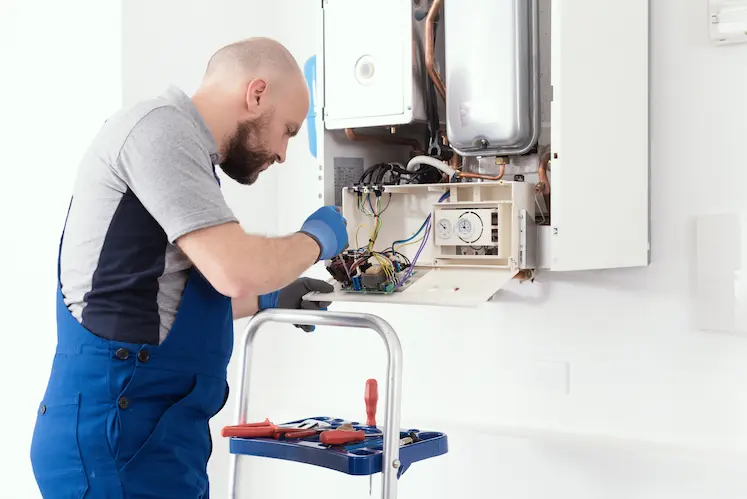
Modern boilers flash a fault code when something's wrong. Write it down, then check the manual or the manufacturer's website. Many codes point to a lockout that clears with a reset, usually a button on the front. If you reset it once and it works, fine. If it locks out again straight away, don't keep pressing it. Repeated resets can mask a developing fault and put extra strain on components.
Boiler locked out and the house is freezing?
Call Now 8001026110Strange noises
A boiler that sounds like a kettle about to boil, with banging, whistling or gurgling, usually has limescale, trapped air or a failing pump. None of these are usually an emergency by themselves, but they do get worse. Book a repair sooner rather than later, or you may be looking at a complete breakdown in the middle of winter.
Radiators cold at the bottom or top
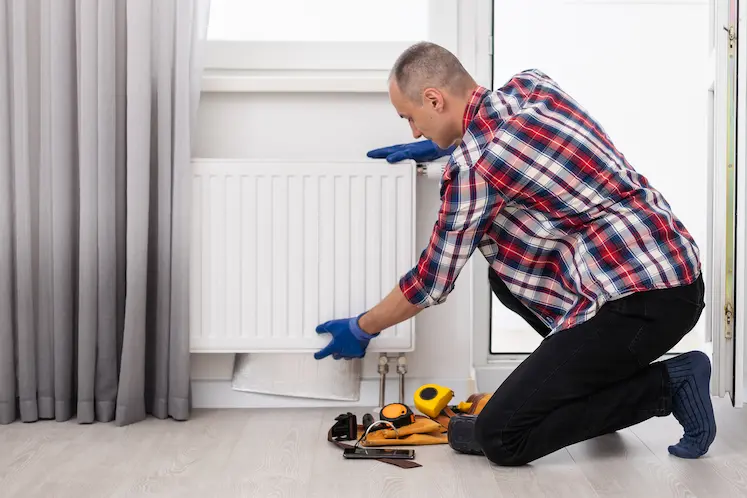
If the boiler runs but some radiators stay cold, the fault is probably in the heating circuit, not the boiler. Cold at the top means trapped air, and bleeding the radiator with a key usually fixes it. Cold at the bottom and warm at the top suggests sludge, which needs a proper flush. If every radiator is cold and the hot water works, a stuck diverter valve or failed pump is more likely.
What not to touch
Bleeding a radiator and topping up pressure are fine. Taking the casing off the boiler, dismantling the gas valve, or tinkering with the flue are not. Gas appliances should only ever be opened and repaired by a qualified, registered engineer. It isn't worth the risk to save one call-out fee.
When to call for emergency boiler repair
A broken boiler is urgent when it leaves people without heat or hot water in cold weather. Ring us straight away if:
- There's no heating or hot water and the house is cold
- Anyone in the home is elderly, very young or unwell
- The boiler is leaking water, or pressure keeps dropping
- You've reset it and it locks out again immediately
- You've noticed a burning smell, soot marks or a yellow flame
Tell us the make, the fault code on the display and what you've already tried. That helps the engineer arrive prepared. Most call-outs are reached within our 30-60 minute average response, day or night.
Read next
Locked Out? What To Do Before You Call A Locksmith
A few quick checks before you pick up the phone can save you a call-out fee, or at least help the locksmith who comes get you back in faster.
Read the guide →
How To Find And Reset Your Fuse Box Safely
A tripped switch is one of the few electrical faults you can safely check yourself. Here's how to find your fuse box and reset it without making things worse.
Read the guide →
Burst Pipe? What To Do In The First 5 Minutes
A burst pipe can flood a room in minutes. Here is exactly what to do, in the order that actually limits damage, before the plumber arrives.
Read the guide →
No Hot Water? What To Check Before You Call An Emergency Plumber
A cold shower on a winter morning is never welcome. Here are the checks worth doing yourself first, before assuming the worst about your boiler.
Read the guide →
Power Cut? How To Tell If It's Just Your House Or The Whole Street
Losing power suddenly is disorientating. Here's how to work out in a couple of minutes whether it's your fuse board or a wider network fault.
Read the guide →
Key Snapped In The Lock? What To Do Next
A key breaking off mid-turn is a different problem to being locked out. Here's what to check before you try to get it out yourself.
Read the guide →
7 Signs You Need An Emergency Plumber (And Can't Wait Until Monday)
Some plumbing problems can sit until the working week. These seven can't. Here's how to tell an annoying drip from a genuine emergency.
Read the guide →
Why Does Your Electricity Keep Tripping? Common Causes Explained
A fuse box that trips once is a nuisance. One that keeps tripping is telling you something. Here's what usually causes it and when to call an electrician.
Read the guide →
When Should You Call An Emergency Electrician?
Burning smells, sparking sockets and scorch marks are not jobs for the morning. Here's how to separate a genuine electrical emergency from a fault that can wait.
Read the guide →
Blocked Drain Emergency? What To Do Right Now
Gurgling pipes, a toilet that won't flush and water backing up are all warning signs. Here's what you can safely try, and what to leave to a professional.
Read the guide →
How Much Does An Emergency Plumber Cost In The UK?
Call-out fees, hourly rates and why evenings cost more than weekdays. A straight breakdown of what an emergency plumber charges and how to avoid surprises.
Read the guide →
24 Hour Plumber vs Regular Plumber: What's The Difference?
Both fix pipes. The difference is when they turn up, how they're paid and what each is best for. Here's how to choose when something goes wrong.
Read the guide →
Frozen Pipes? How To Thaw Them Safely
A frozen pipe can split as it thaws. Here is how to thaw one safely, what to do about a frozen boiler condensate pipe, and how to stop it happening again.
Read the guide →No heating? Don't sit in the cold.
Our line is open 24 hours a day, 7 days a week. Call now and we'll send a local engineer.
Call Now 8001026110