Blocked Drain Emergency? What To Do Right Now
A slow sink is irritating. A toilet that gurgles and then sends water back up the pan is a whole different level of unpleasant. Blocked drains can go from nuisance to flooded floor fast, and the first few minutes decide how bad it gets. Here's what to do, and just as importantly, what to leave alone.
Stop adding water
The instinct is to flush again or run the tap to push things through. Resist it. If the drain is blocked, every extra litre has nowhere to go and ends up on your floor. Stop using the affected toilet, sink or bath, and ask everyone in the house to hold off on the washing machine and dishwasher too, since they discharge into the same pipework.
Work out which drain it is
Where the symptoms appear tells you a lot. One slow sink usually means a local blockage in its own waste pipe. If the bath gurgles when you flush the toilet, or several fixtures drain slowly at the same time, the blockage is further down the shared line. Water or sewage bubbling up in the garden, or a manhole cover that's overflowing, points to the main drain outside, and in some cases that belongs to the water company rather than you.
Water backing up and not going down?
Call Now 8001026110What you can safely try
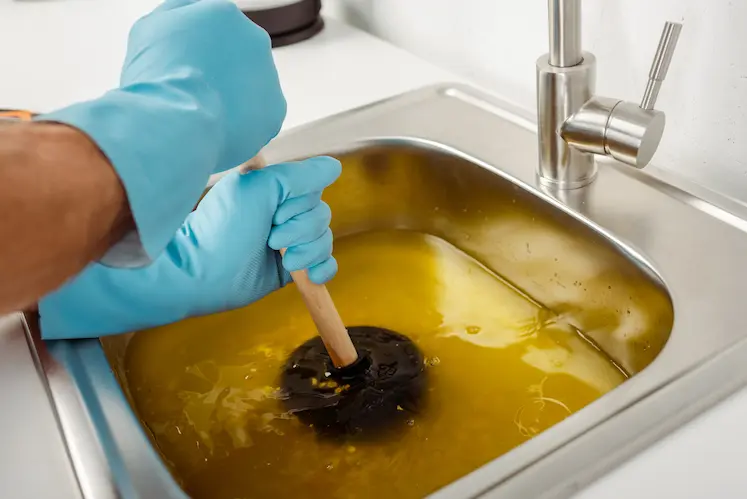
For a sink or basin, a good plunger is the first tool to reach for. Block the overflow hole with a damp cloth, get a firm seal over the plughole and pump steadily for 20 seconds or so. A toilet plunger with a flange works best on a blocked pan. Once it clears, flush with hot water, not boiling, which can crack porcelain.
Under the sink, you can also unscrew the U-bend, or trap, and empty it into a bucket. It's the usual place for grease, hair and food to collect. Wear gloves, because what comes out is rarely pleasant.
What to avoid
Skip the drain cleaner bottles. Caustic chemicals can sit in a pipe that hasn't cleared, damage older joints, and splash back at whoever tackles it next, including a plumber. Don't push wire coat hangers down toilet pans, either. They scratch the porcelain and can wedge the blockage tighter. And if you've used a chemical cleaner already, tell the plumber when they arrive.
Common causes
Kitchen sinks block with fat and food residue that cools and sets inside the pipe. Bathrooms block with hair and soap scum. Toilets block with too much paper, or with things that were never meant to go down, such as wet wipes, nappies, cotton buds and sanitary products. Outdoors, tree roots and collapsed or displaced pipe sections cause repeat blockages that no plunger will ever solve.
What a plumber does differently
A plumber can rod a blockage out with drain rods or an electric auger, and for stubborn or recurring problems, high-pressure jetting clears grease and debris from the full pipe wall instead of just punching a hole through it. For repeated blockages, a camera survey shows what's actually happening underground, so you're not paying for the same fix again in three months.
When to call for help
Call a plumber if:
- Sewage or foul water is coming back up through a drain or toilet
- More than one fixture is blocked at the same time
- Plunging hasn't worked, or the water level keeps rising
- You can see water pooling around a manhole or gully outside
- The same drain keeps blocking again within weeks
We can send a local plumber with the right equipment, usually within our 30-60 minute average response. If your problem is a toilet or tank that is overflowing, shut off the isolation valve first. Our list of plumbing emergency signs shows how to tell what's urgent.
Read next

Locked Out? What To Do Before You Call A Locksmith
A few quick checks before you pick up the phone can save you a call-out fee, or at least help the locksmith who comes get you back in faster.
Read the guide →
How To Find And Reset Your Fuse Box Safely
A tripped switch is one of the few electrical faults you can safely check yourself. Here's how to find your fuse box and reset it without making things worse.
Read the guide →
Burst Pipe? What To Do In The First 5 Minutes
A burst pipe can flood a room in minutes. Here is exactly what to do, in the order that actually limits damage, before the plumber arrives.
Read the guide →
No Hot Water? What To Check Before You Call An Emergency Plumber
A cold shower on a winter morning is never welcome. Here are the checks worth doing yourself first, before assuming the worst about your boiler.
Read the guide →
Power Cut? How To Tell If It's Just Your House Or The Whole Street
Losing power suddenly is disorientating. Here's how to work out in a couple of minutes whether it's your fuse board or a wider network fault.
Read the guide →
Key Snapped In The Lock? What To Do Next
A key breaking off mid-turn is a different problem to being locked out. Here's what to check before you try to get it out yourself.
Read the guide →
7 Signs You Need An Emergency Plumber (And Can't Wait Until Monday)
Some plumbing problems can sit until the working week. These seven can't. Here's how to tell an annoying drip from a genuine emergency.
Read the guide →
Boiler Stopped Working? What To Do Before Calling For Emergency Repair
Pressure, error codes, strange noises, a smell of gas. Here's what each boiler symptom usually means and which ones need help straight away.
Read the guide →
Why Does Your Electricity Keep Tripping? Common Causes Explained
A fuse box that trips once is a nuisance. One that keeps tripping is telling you something. Here's what usually causes it and when to call an electrician.
Read the guide →
When Should You Call An Emergency Electrician?
Burning smells, sparking sockets and scorch marks are not jobs for the morning. Here's how to separate a genuine electrical emergency from a fault that can wait.
Read the guide →
How Much Does An Emergency Plumber Cost In The UK?
Call-out fees, hourly rates and why evenings cost more than weekdays. A straight breakdown of what an emergency plumber charges and how to avoid surprises.
Read the guide →
24 Hour Plumber vs Regular Plumber: What's The Difference?
Both fix pipes. The difference is when they turn up, how they're paid and what each is best for. Here's how to choose when something goes wrong.
Read the guide →
Frozen Pipes? How To Thaw Them Safely
A frozen pipe can split as it thaws. Here is how to thaw one safely, what to do about a frozen boiler condensate pipe, and how to stop it happening again.
Read the guide →Drain won't clear?
Our line is open 24 hours a day, 7 days a week. Call now and we'll send a local plumber.
Call Now 8001026110